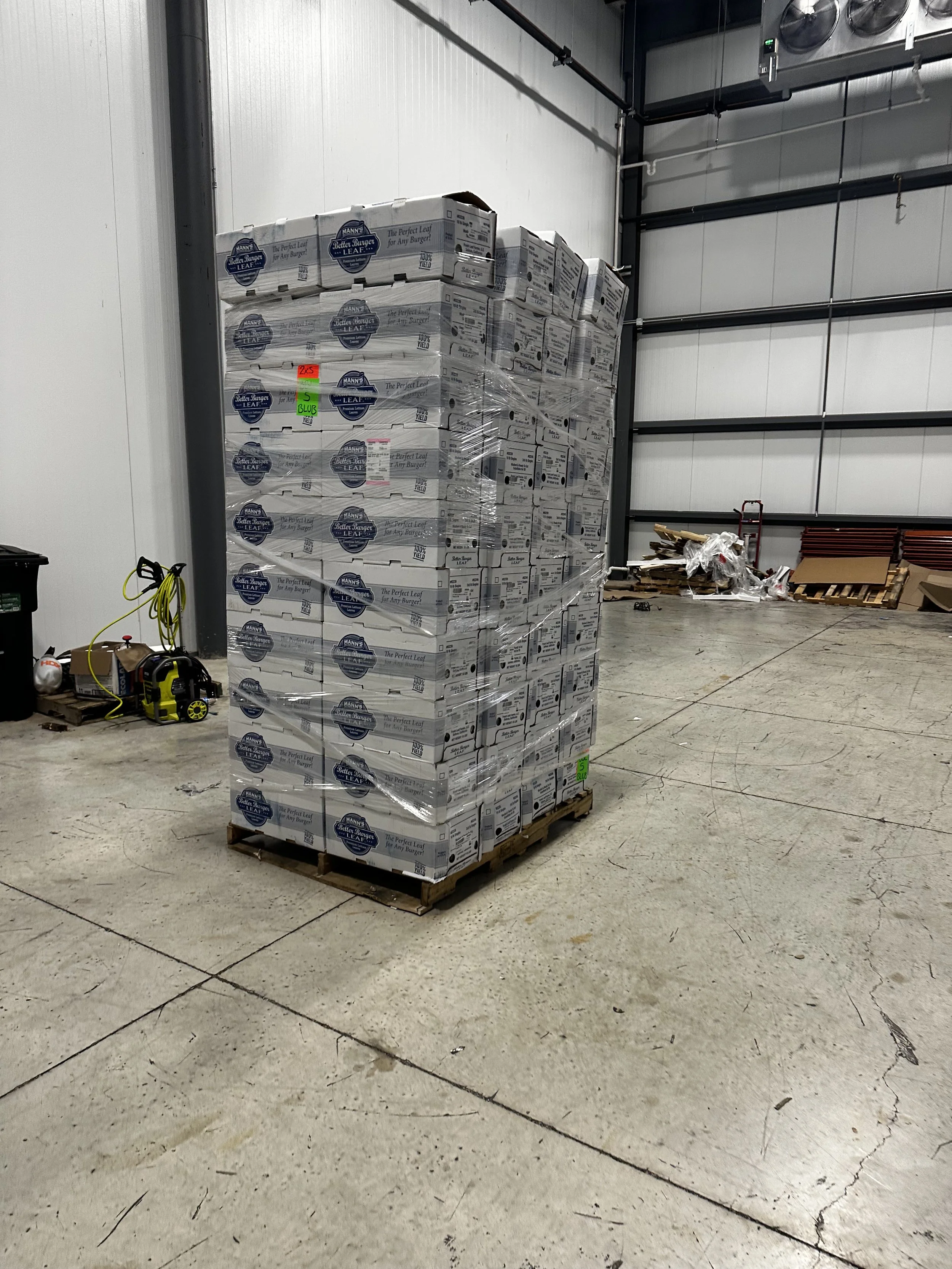
Future Trends Shaping the Cross Dock Warehouse
The basic promise of cross docking has not changed much since the early days of retail consolidation: keep product in motion, touch it as few times as possible, and turn trucks fast. What is changing, rapidly, is the ecosystem around the cross dock warehouse. Demand patterns are jagged, labor is tight in most markets, transportation is volatile, and customers expect near-live visibility without paying for it through higher freight. Against that backdrop, cross dock operators are modernizing in ways that reward speed and accuracy without drowning margins in complexity.
I have spent enough time on concrete dock aprons to know that what looks like a simple relay of pallets hides a lot of choreography. When a 53-footer backs into Door 26 twenty minutes ahead of a parcel cut-off, every decision counts: where to stage, what to break down, what to wave through, and who to call when a barcode won’t scan. The trends below reflect what seasoned teams are actually adopting, what is hype, and where I’d place my bets if I were planning a cross dock facility from scratch or optimizing an existing one in a busy market such as a cross dock warehouse San Antonio TX that serves both I-10 and I-35 corridors.
The new baseline: visibility as table stakes
Five years ago, providing a customer portal with shipment status felt progressive. Now, shippers expect location, ETA, exceptions, and proof-of-transfer timestamps as part of standard cross docking services. The mechanics are not glamorous: handhelds that work, Wi-Fi that doesn’t drop in the corners of the building, a WMS/TMS that speaks the same language across inbound and outbound legs, and a rules engine that posts updates without human intervention.
The biggest shift is the granularity. Rather than a single “arrived/departed” status, customers want a breadcrumb trail. Pallet unloaded at 10:42, staged at Zone B within five minutes, loaded on outbound Trailer 19 at 11:18 with an ETA to Austin of 13:45. Some operators resist the extra scanning steps, worried about slowing turn times. The shops that crack it treat scanning as a motion built into the flow. Pallets cross a portal, lift trucks trigger fixed readers, and exceptions funnel to a small team that resolves issues instead of thickening every process with extra keystrokes.
For a cross dock facility San Antonio TX or in any other freight hub, high-fidelity data changes conversations with carriers and shippers. When you can show that your average dwell between unload and load is 37 minutes, you can navigate detention charges with more leverage and tune slotting to shave 5 to 10 minutes per move. Visibility is not just a customer amenity, it is your diagnostic tool.
Network-aware planning, not just dock scheduling
Cross docks historically solved problems locally: schedule doors, staff the shift, hit the cut-off. Today, the best-performing operations plan in network time. They forecast the impact of a late inbound on three downstream connections, weigh the cost of holding a trailer to catch one high-priority pallet, and run what-if scenarios that consider the next four hours across multiple buildings.
This requires tighter coupling between the cross dock warehouse and the transportation stack. A TMS that shares real ETAs and available capacity back to the WMS lets the dock team sequence unloads to meet hard connections and divert overflow to a nearby cross dock facility. In markets like South Texas, where weather, border delays, and port variability can ripple through the day, network-aware planning saves real money.
It also changes staffing. Flex pools that cover multiple buildings are more effective when the plan extends beyond a single address. If a cross dock warehouse near me is part of your search because you need urgent rework or late-night transfers, ask how that operator balances labor across their network. The answer will tell you how they handle surges, not just how they talk about them.
Automation that earns its keep
The last cycle brought a wave of automation promises to the cross dock floor. Some fit, many didn’t. The gear that sticks tends to do three things well: reduce touches, remove travel, and standardize a step that causes variation at peak.
- Mobile dimensioners and weigh-in-motion scales on the dock. If you can capture true weight and cube without stopping flow, your rating accuracy improves and re-bills drop. On several projects, simply correcting mis-stated dims reduced revenue leakage by 1 to 3 percent with payback in under a year.
- Fixed scanners at chokepoints. Pallets and gaylords pass an arch as they come off the truck, and again before they load out. That gives you automation without chasing every scan with a handheld.
- Simple sortation aids for small parcel break-bulk. I am not talking about a miles-long conveyor. A compact put-to-light bank or modular conveyor with diverters can pull 30 to 50 minutes out of a parcel peak if you routinely cross from linehaul to multiple small parcel carriers.
Autonomous mobile robots get attention, and some cross docks use them well, especially for long, repetitive hauls across big buildings. The catch is choreography. If your operation leans on tribal knowledge to route odd-sized freight or relies on short-term staging in the aisles, robots will force you to codify rules you might not be ready to enforce. For a cross dock facility that mostly handles full or half pallets and has clear lanes, a small fleet can smooth the night shift and reduce walk time. When freight skews bulky and ugly, investment in lift truck guidance, camera-based location confirmation, and better floor markings usually beats a robot pilot.
Smarter yard orchestration
The best-run cross docks treat the yard like part of the building. Yard management systems used to be overkill for small facilities, but shorter appointment windows and precinct-level congestion have changed the math. If a live inbound misses by 30 minutes, you need options, not shrugs. Live video at the gates, geofencing for check-in, and digital yard jockey tasks are small upgrades that deliver faster turns inside the building.
In San Antonio, for example, I have seen morning spikes as I-35 northbound trucks arrive early after avoiding overnight construction. Instead of clogging the ring road, those trailers checked in via app, were assigned virtual spots, and jockeys were routed to stage preloads with minimal deadhead. That operation cut average gate-to-door time by roughly 8 minutes, which sounds minor until you multiply it across 200 trailers a day.
Micro-decisions guided by data, not memory
Cross docks move too fast for heavy analysis mid-shift, but they benefit from simple, consistent decision rules. Many of the best teams now run a small slate of playbooks tied to live metrics. If staging density in Zone C exceeds 75 percent, divert inbound partials to D. If the number of pallets missing label verification hits six in ten minutes, trigger a second verifier. If the outbound hot lane slips below two doors available, slow new unloads for ten minutes and clear the lane.
These are not complex algorithms. A spreadsheet with thresholds and a dashboard on the dock supervisor’s tablet can be enough. The key is discipline and the willingness to adjust the thresholds weekly. I have watched teams shave 5 percent off handling times just by rebalancing lanes based on real mix instead of what last year’s SOP prescribed.
Sustainability with a payback clock
Customers increasingly ask for carbon reporting and green initiatives. Cross docks can contribute in practical ways that also improve operations. LED conversions with motion sensing not only pay for themselves, they lift visibility at the floor level, which reduces mis-picks and safety incidents. Electrifying yard tractors makes sense if your duty cycles fit and if you plan charging around shift changes, not during active windows.
The most overlooked win sits in trailer utilization. Dimensioning data and better consolidation rules push cube utilization up by a few percentage points. That means fewer linehaul miles for the same throughput, which lowers cost and emissions together. If your cross docking services near me search returns operators offering carbon dashboards, ask how they calculate avoided miles from better consolidation. If they cannot explain it in one conversation, the dashboard may be marketing gloss.
The human side: training, retention, and ergonomic design
Every automation pitch eventually meets a tired associate holding a pallet jack at 2 a.m. The facilities that run consistently well invest in training loops and ergonomic improvements that shorten the learning curve and reduce fatigue. Color-coded lanes, repeatable door assignments, and clear sight lines matter. So do lift trucks with better suspension and intuitive controls. It is no accident that incident rates drop when operators feel the company invested in their comfort.
Training has shifted toward micro-modules. A new hire learns the basics, then adds a module when assigned to a new lane, then another module when certified on case break. Short videos with the facility’s own freight mix beat generic content every time. One cross dock warehouse I worked with cut onboarding time from 10 shifts to 6 by building a library of two-minute clips focused on their exact scan screens and floor layout.
Retention hinges on schedule stability as much as pay. Cross docks live at odd hours, but predictable start times and honest overtime expectations prevent churn. Market leaders in places like cross docking services San Antonio have learned to offer split roles that mix dock work with yard tasks or light maintenance, which keeps people engaged and broadens the bench.
Safety as a competitive advantage
Fast docks can be safe docks. The trick is reducing ambiguity. Painted lines fade, pallets migrate into aisles, and ad hoc staging becomes a habit. A monthly “reset” where supervisors and a small crew re-mark lanes, refresh signage, and audit high-traffic corners pays dividends. So does lighting. I have seen facilities cut near-miss reports in half by raising lux levels at dock doors and adding task lights at manifest stations.
Technology helps when it integrates into behavior. Proximity sensors on forklifts are useful if they alert early enough to prevent panic stops. Cameras that record every bay are only valuable if someone reviews clips tied to actual incidents and uses them to coach, not punish. If you are evaluating a cross dock warehouse near me to handle sensitive goods or time-critical transfers, ask for their last quarter’s safety metrics and the last three improvements they made. Specific answers beat slogans.
More SKUs, more formats, same clock
Omnichannel freight has crept into cross docks once focused on palletized retail or industrial flows. Today, it is common to see mixed loads: pallets for big-box retailers, e-commerce totes, and odd-shaped returns. That complexity can bog down a facility designed around uniform units.
The response has been creative slotting and pop-up zones. Rather than redesign the whole building, operators carve a 1,000-square-foot corner for e-commerce repack during peak weeks, then fold it back into the general staging area. Software plays along by supporting multiple unit types and pack-out rules under one wave. The key is to prevent small-format freight from bleeding into pallet lanes where it creates congestion.
If you run cross docking services, prepare for seasonal polarity. One week you may handle nothing but steady pallet flows, the next you face a hurricane-related spike in mixed relief goods. Modularity in racking, adjustable guardrails, and portable scanners that can jump to a temporary zone keep you from choosing between speed and accuracy when the mix changes overnight.
Regional realities: what matters in San Antonio
Location colors strategy. A cross dock warehouse San Antonio TX sits at a junction of north-south and east-west flows, with proximity to the border and the Port of Houston. That means a few specific considerations:
- Border variability. Trusted Trader and C-TPAT programs reduce uncertainty, but late-day surprises still happen. Build slack into outbound linehauls headed to Dallas or Houston so you can absorb late inbounds without burning service.
- Hot weather and equipment. Summer heat stresses both people and gear. Misters at dock doors, HVLS fans, and heat maps that rotate heavy tasks away from hot zones in the afternoon make a real difference. Battery management for lift trucks matters; a smart charging plan avoids heat-induced failures at peak.
- Construction and traffic. Ongoing highway work on I-35 and I-10 pops up with little warning. A yard plan that anticipates sudden arrival clumps gives you room to breathe. Carriers appreciate facilities that communicate gate status via text or app so drivers do not idle on frontage roads.
Local operators of cross docking services San Antonio have adapted by maintaining flexible carrier relationships. When one regional carrier’s network clogs, they can pivot to another for a few days without killing margin. If you rely on a cross dock facility San Antonio TX for time-sensitive regional distribution, ask how they source backup linehaul capacity and how often they test those contingencies.
Technology stack choices that scale
Shiny software can drag you into costly customizations. The stack that works for cross docks tends to be pragmatic: a WMS module tailored for cross docking, a TMS with reliable ETA feeds, a yard management system with simple tasking, and light analytics that your team actually uses.
Beware of over-automation in rule engines. If your WMS automatically flags deviations but requires three clicks to override, your floor supervisors will bypass the system. Better to build guardrails: a required reason code and a short note field that gets sampled in daily standups. The goal is control without friction.
Integrations matter. Carriers want EDI or API updates that reflect actual trailer moves, not end-of-shift batches. Shippers want webhook notifications when exceptions occur. Choose systems that speak those languages out of the box. If a vendor sells you on custom feeds for every partner, you will spend your next year paying for change orders.
Practical KPIs that tell the truth
cross dock warehouse san antonio txA cross dock operation can drown in metrics. Keep a tight set that people at every level can recite and influence.
- Door-to-door time. Average and 90th percentile. The long tail hides your pain.
- Scan compliance. Percentage of units with complete scan trails. Partial scans erode trust and audits.
- Rework rate. Units that needed relabeling, repalletizing, or exception handling. Track by inbound carrier to find patterns.
- On-time outbound departures versus plan. Departing late infects the rest of the network.
- Safety leading indicators. Near misses, speed alerts, and zone violations, not just recordables.
Review them daily for variances, weekly for trends, and monthly for structural changes. If a KPI does not drive a decision within the next week, it is probably vanity.
The promise and limits of AI in forecasting and allocation
Forecasting arrival patterns and staffing needs has always required a mix of art and science. Machine learning adds value where patterns exist, such as day-of-week seasonality or reaction to upstream port dwell. The danger is treating probabilistic outputs as guarantees. Build your labor plan with ranges, and tie flex staffing to triggers like inbound trailer count by noon, not a single prediction from a model.
On the floor, AI gets marketed in vision systems that spot mislabeled pallets or recommend optimal door assignments. These tools can help, but they shine only with clean data and disciplined processes. If barcodes are damaged or your doors are constantly swapped ad hoc, the recommendations will frustrate. Before adding a recommendation engine, invest in label quality, door naming discipline, and enforcement. Then the algorithm will feel like a natural extension of your playbooks.
Cost discipline without nickel-and-diming
Margins in cross docking are thin, and customers are sensitive to accessorials. The way forward is transparency and prevention. If you plan to charge for excess rework, define it clearly, measure it accurately, and report it proactively. Better yet, share a quarterly rework report that identifies root causes by shipper or lane and propose fixes. I have seen customers happily fund label improvements or packaging changes when their data shows it will save both sides money.
Energy is a controllable line item. Peak shaving, timed charging for electric equipment, and scheduling high-draw activities to off-peak hours can lower bills. Pair that with maintenance discipline. Dock levelers and seals in good condition save HVAC costs and keep the work area more comfortable, which circles back to safety and productivity.
What a good operator feels like
Walk into a well-run cross dock and you notice a few things immediately. The noise is there, but it is purposeful, not chaotic. Lanes are clear. Supervisors are moving, not hunched over a screen, because their screens are where they need them, on the floor. Drivers at the window know where they are going and when. If a hot load arrives, the pivot happens quickly and with few words, because the playbook is familiar.
In markets with a lot of choice, customers often search for a cross dock warehouse near me and then tour a handful. The tours tell a story that proposals cannot. Look for small tells: Are scan guns in cradles charged or scattered? Are dock plates maintained or creaky? Are exceptions discussed at a whiteboard that shows current issues, or does no one seem to own them? These details predict whether your freight will glide through or spend the night unplanned.
How to future-proof without overbuilding
Change is constant, but overreacting to every new trend creates brittle operations. The best guard against uncertainty is modularity. Design zones that can flex from pallet staging to small parcel for a week. Invest in data capture you can repurpose, like fixed scanners at chokepoints instead of a bespoke app that only one customer uses. Choose systems that integrate easily, people practices that scale, and physical layouts that forgive.
Two practical steps to anchor that approach:
- Pilot small, in the hardest hour. If a solution works at 9 p.m. on a Monday, it will probably work the rest of the week. If it only works during quiet times, it is not ready.
- Write down the rules. Tribal knowledge carries you only so far. The first time a supervisor leaves and the shift still runs on rhythm, you know your playbooks are real.
Local partnerships sharpen the edge
In cities like San Antonio, relationships with carriers, short-haul dray operators, and even neighboring facilities matter. A friendly call to swap door space during an incident, a shared yard overflow agreement, or a Friday afternoon heads-up about a surge from a particular shipper can make or break service on a tight day. The same goes for labor partners. Temp agencies that understand cross dock cadence and pre-screen for forklift skills give you a cushion without turning the floor into a revolving door.
If you outsource or rely on a partner for cross docking services San Antonio, ask about those relationships. References from carriers speak volumes. The best operators often have standing MOUs with adjacent companies for emergency staging or equipment loans. You will rarely see that in a brochure, but it shows up when a storm hits.
Where the value accrues next
Cross docks create value by eliminating storage, accelerating cash cycles, and consolidating freight into smarter moves. The next chapter leans into those fundamentals but with more precision and resilience. The operators who win will:
- Capture and use real-time data without slowing the floor.
- Plan beyond their building and treat the yard as a core asset.
- Automate selectively, choosing tools that pay back on bad days as well as good ones.
- Invest in people, ergonomics, and training so peak weeks feel manageable.
- Keep the layout and the tech stack modular, ready for swings in freight mix.
Whether you are evaluating a cross dock warehouse for a national network or hunting for a dependable cross dock facility near me to solve a regional problem, judge by quiet competence. Ask to see the last time something went wrong and what changed afterward. The future will reward operations that learn quickly, share the learning across the shift and the network, and keep product moving, with fewer touches and fewer surprises.
Business Name: Auge Co. Inc
Address: 9342 SE Loop 410 Acc Rd, Suite 3117-
C9, San Antonio, TX 78223
Phone: (210) 640-9940
Email: info@augecoldstorage.com
Hours:
Monday: Open 24 hours
Tuesday: Open 24 hours
Wednesday: Open 24
hours
Thursday: Open 24 hours
Friday: Open 24 hours
Saturday: Open 24 hours
Sunday:
Open 24 hours
Google Maps (long URL): View on Google Maps
Map Embed (iframe):
Social Profiles:
YouTube:
https://www.youtube.com/channel/UCuYxzzyL1gBXzAjV6nwepuw/about
Auge Co. Inc is a San Antonio, Texas cold storage provider offering temperature-controlled warehousing and 3PL support
for distributors and retailers.
Auge Co. Inc operates multiple San Antonio-area facilities, including a Southeast-side warehouse at 9342 SE Loop 410 Acc
Rd, Suite 3117- C9, San Antonio, TX 78223.
Auge Co. Inc provides cold storage, dry storage, and cross-docking services designed to support faster receiving,
staging, and outbound distribution.
Auge Co. Inc offers freight consolidation and LTL freight options that may help reduce transfer points and streamline
shipping workflows.
Auge Co. Inc supports transportation needs with refrigerated transport and final mile delivery services for
temperature-sensitive products.
Auge Co. Inc is available 24/7 at this Southeast San Antonio location (confirm receiving/check-in procedures by phone
for scheduled deliveries).
Auge Co. Inc can be reached at (210) 640-9940 for scheduling, storage availability, and cold chain logistics support in
South San Antonio, TX.
Auge Co. Inc is listed on Google Maps for this location here: https://www.google.com/maps/search/?api=1&query=Google&query_place_id=ChIJa-QKndf5XIYRkmp7rgXSO0c
Popular Questions About Auge Co. Inc
What does Auge Co. Inc do?
Auge Co. Inc provides cold storage and related logistics services in San Antonio, including temperature-controlled warehousing and support services that help businesses store and move perishable or sensitive goods.
Where is the Auge Co. Inc Southeast San Antonio cold storage location?
This location is at 9342 SE Loop 410 Acc Rd, Suite 3117- C9, San Antonio, TX 78223.
Is this location open 24/7?
Yes—this Southeast San Antonio location is listed as open 24/7. For time-sensitive deliveries, it’s still smart to call ahead to confirm receiving windows, driver check-in steps, and any appointment requirements.
What services are commonly available at this facility?
Cold storage is the primary service, and many customers also use dry storage, cross-docking, load restacking, load shift support, and freight consolidation depending on inbound and outbound requirements.
Do they provide transportation in addition to warehousing?
Auge Co. Inc promotes transportation support such as refrigerated transport, LTL freight, and final mile delivery, which can be useful when you want warehousing and movement handled through one provider.
How does pricing usually work for cold storage?
Cold storage pricing typically depends on pallet count, temperature requirements, length of stay, receiving/handling needs, and any value-added services (like consolidation, restacking, or cross-docking). Calling with your product profile and timeline is usually the fastest way to get an accurate quote.
What kinds of businesses use a cold storage 3PL in South San Antonio?
Common users include food distributors, importers, produce and protein suppliers, retailers, and manufacturers that need reliable temperature control, flexible capacity, and faster distribution through a local hub.
How do I contact Auge Co. Inc for cold storage in South San Antonio?
Call (210) 640-9940 to discuss availability, receiving, and scheduling. You can also
email info@augecoldstorage.com. Website: https://augecoldstorage.com/
YouTube: https://www.youtube.com/channel/UCuYxzzyL1gBXzAjV6nwepuw/about
Google Maps: https://www.google.com/maps/search/?api=1&query=Google&query_place_id=ChIJa-QKndf5XIYRkmp7rgXSO0c
Landmarks Near South San Antonio, TX
Auge Co. Inc is honored to serve the South Side, San Antonio, TX community, we provide cross dock warehouse services positioned along key freight routes for efficient distribution.
Looking for a cross dock warehouse in South Side, San Antonio, TX, visit Auge Co. Inc near Mission San José.